
Plyo Balls and Weighted Balls: Should youth baseball players use them?
Aug 21, 2026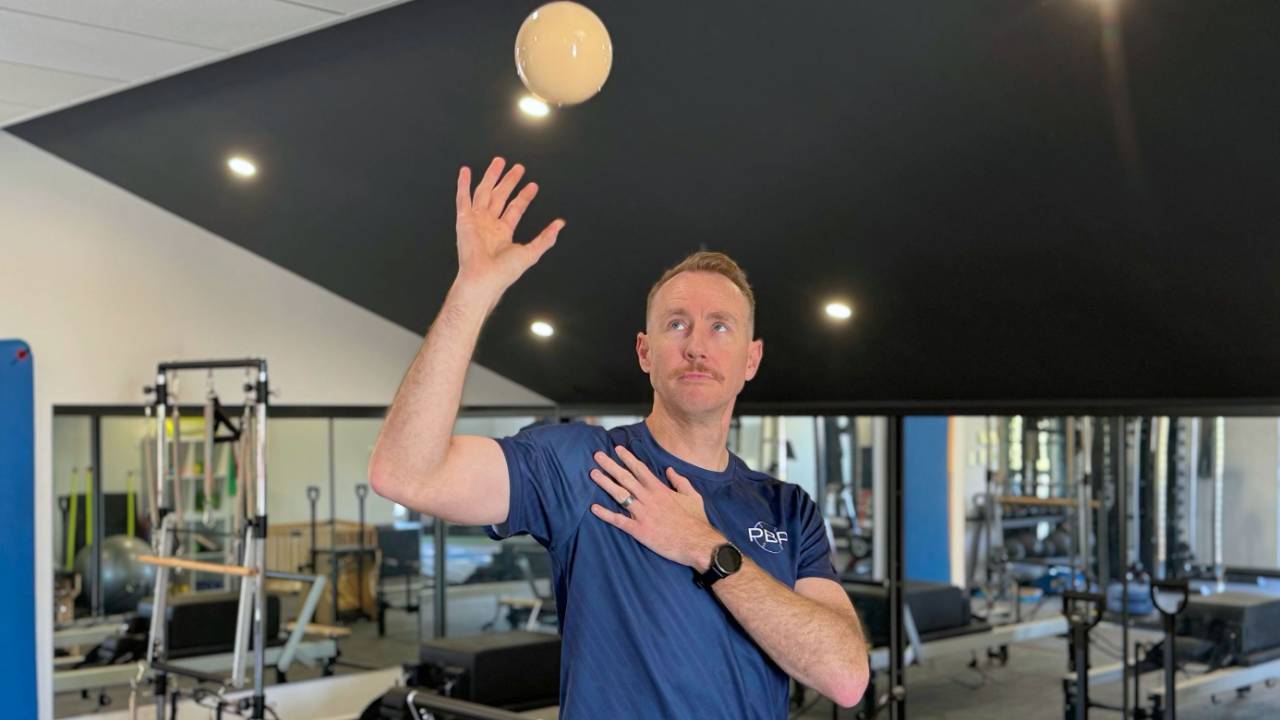
Should youth baseball players do plyo ball or weighted ball routines, is a common question we hear from parents and coaches. The answer is sometimes yes and sometimes no.
Before we get into whether they should be part of a baseball player’s routine, let’s clarify what we mean by each one.
A plyo ball is a heavy ball that you use for arm care exercises like flip catches, drop catches and plyometric exercises. A weighted ball is a heavy ball that people throw with a partner as part of their warm-up.
Are plyo balls and weighted balls safe?
As with anything, whether it’s throwing, gym, weight routines or weighted ball routines, the problem is often not the ball or the weight itself, but the short period of time that people generally expose their arm to a new stimulus. Let me explain.
Our bodies need gradual exposure so they can adapt and adjust to the new stimulus. If you’re child has gone from off-season, where they’re not throwing at all, to starting preseason, they will be throwing more days per week and more throws per session. They’ve probably also added in a band routine or strength work – So adding a plyo or weighted ball routine on top of this is adding to an already high workload.
If you gradually introduce these routines over a period of 4-6, even 8 weeks, your child’s arm has had time to adapt and may well be okay.
However, if you start doing plyo balls and weighted balls after not doing much for weeks – the risk of injury significantly goes up. Even more problematic is the fact that arm overuse injuries don’t always show up straight away. Your child might manage the new load for several weeks before breaking down.
Should youth baseball players use weighted balls?
The main thing that we see with youth baseball players and supplementary devices is they may not have particularly good throwing mechanics to begin with.
They have growing bodies, arms and legs that are getting longer before they can coordinate their movements properly. As a result, young players often don’t use their lower body as efficiently as they will learn to a few years down the track.
They also tend to throw a lot more with just the arm, which can be a problem even with throwing normal baseballs, let alone anything with extra weight added.
What to focus on early
What we want to establish is making sure they have good lower body mobility and the ability to get into their hips before they throw. That they can generate a good amount of force from the ground up to start their mechanics, so that the arm is well supported by the legs and the trunk, from wind-up all the way through to follow-through.
This is particularly important for young players who are still growing and developing their throwing mechanics.
Before adding more load to the arm, we want to make sure the player understands what good mechanics look like and have a good foundation to build upon.
When to start plyo and weighted ball routines?
As a physiotherapist, my professional opinion is: the safest place to start is with low reps of a light weight, as a complement to their throwing work and whilst fine tuning lower half mechanics.
Importantly, we don’t want them doing things just because other people are doing them. If they see a Major League Baseball player doing a plyo ball routine, it doesn’t mean that it’s going to be suited to their body.
The more youth players understand about baseball arm care holistically, including the need for a progressive build up over 4-6 weeks, the safer any new addition to their routine will be.
To wrap up, the goal shouldn't be to avoid things like plyo balls or weighted balls altogether. It’s to ensure they’re appropriate for the player, introduced slowly and considered in the context of the player's overall routine – rather than simply adding another big load to the arm.
Our Arm Care Fundamentals removes this kind of guesswork by teaching players how to build and maintain a resilient arm for life. Every lesson, every exercise, tip and drill, all packaged into one easy to follow online course that takes less than an hour to complete. See what ACF is all about.
Keep working.
Jason & Josh